Culture
Not Grand Visions of a Hundred Years, but Making Tomorrow Better Than Today

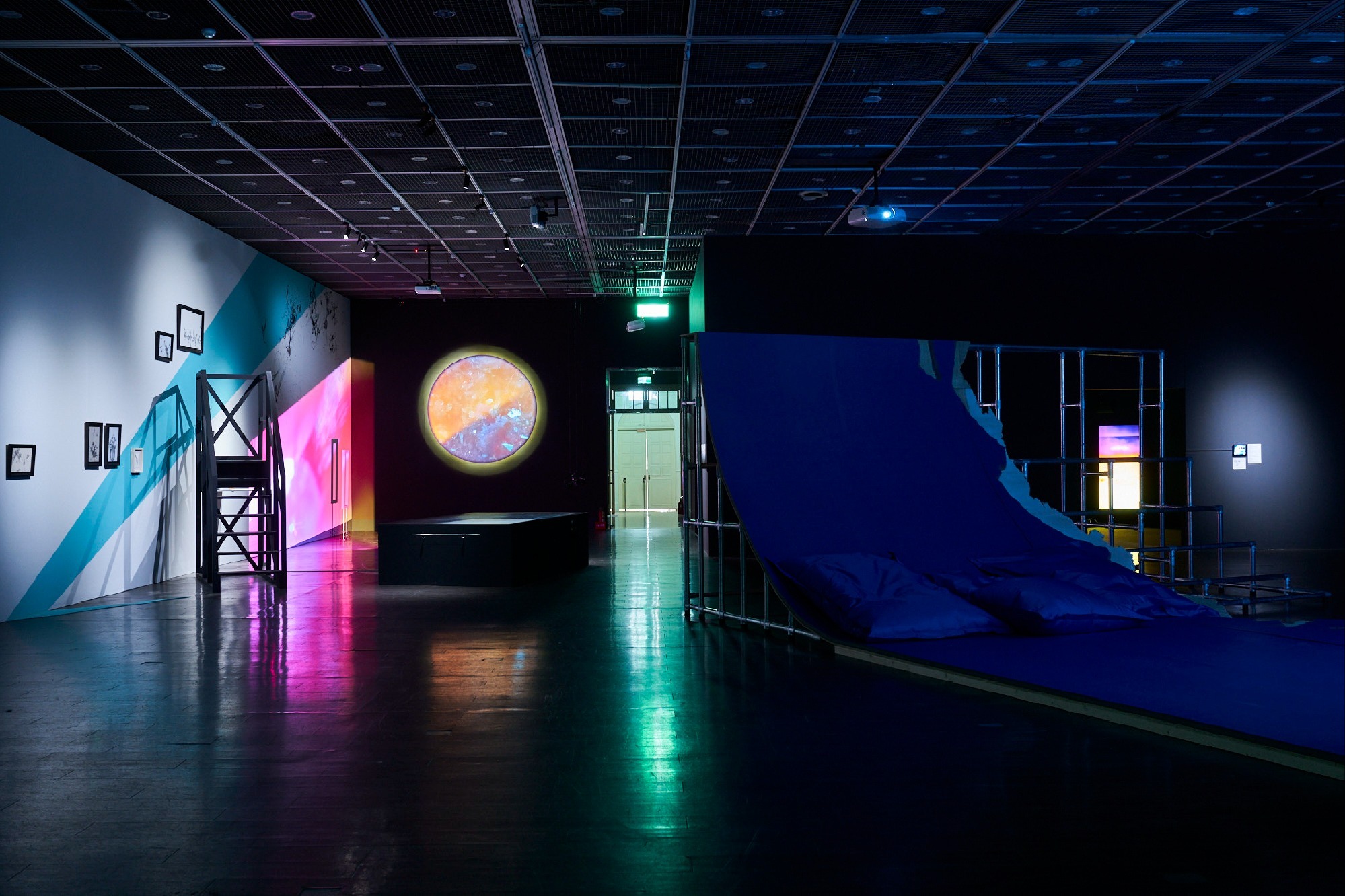
If people only look once, take a photo, and then move on, that’s merely an exhibition—not change. Of course, some argue that the real solution to marine waste lies in source reduction, not beach cleanups. RE-THINK has heard these critiques.But they choose to believe one thing: If tomorrow can be even slightly better than today, then the path is worth walking.
Duration:2018~
Rationale
When RE-THINK’s founder first shared the idea with us, beach cleanups were hardly a new topic.
Trash on the shore is cleared year after year—only to return again. Many groups are already doing it.
Naturally, we asked:
What makes you different from other cleanup organizations?
If you’re not an art group, why approach environmental protection through design and culture?
These were precisely the questions RE-THINK had been asking themselves.
Initiatives
Taiwan’s coastline is long, and ocean currents constantly bring new debris ashore.
To be honest, beach cleanups will never truly end.
RE-THINK understands this clearly. So they did not stop at “picking up trash.”
Instead, they asked:
How can more people be willing to join? And keep coming back?
They transformed beach cleanups into something almost like a treasure hunt.
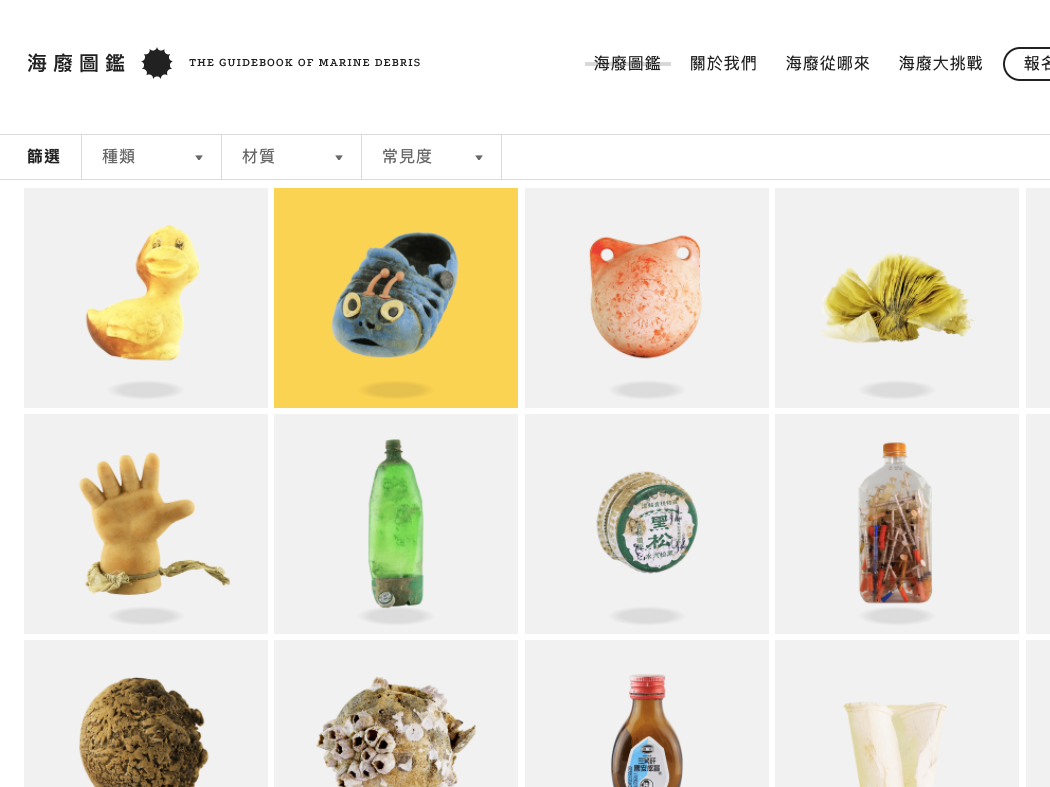
The marine debris collected was no longer just garbage—it was documented, categorized, and made visible.
Inspired by the 2017 Venice Biennale controversy surrounding Damien Hirst and Jason deCaires Taylor’s ocean-related works, RE-THINK began to reflect:
These objects left behind by waves are in fact records of human life.
Packaging from different countries. Waste made of different materials.
All converging along Taiwan’s shores.
After a year of work, they published the Marine Waste Encyclopedia.
Some questioned whether making design playful might dilute the seriousness of environmental issues.
“Environmental protection is a serious matter—if it’s made too interesting, will people fail to take it seriously?”
RE-THINK’s answer was direct:
The purpose of design is to help people understand—and to act.
If people only look once, take a photo, and move on, that’s an exhibition—not transformation.
Yes, some argue that marine waste must be solved at its source, not on beaches.
RE-THINK hears these critiques.
But they remain committed to a simple belief:
If tomorrow is even slightly better than today, the effort is worthwhile.
Impact
After Marine Waste Encyclopedia received the highest honor at the German Red Dot Design Award, RE-THINK did not slow down.
They realized another everyday issue lies even closer to us: recycling.
In Taiwan, recycling rules vary from place to place.
The same word—“recyclable”—can mean different things to different people.
Some interpret it as “burnable vs. non-burnable.”
Others think it means “can it be reused?”
The label may be the same, but the understanding is not.
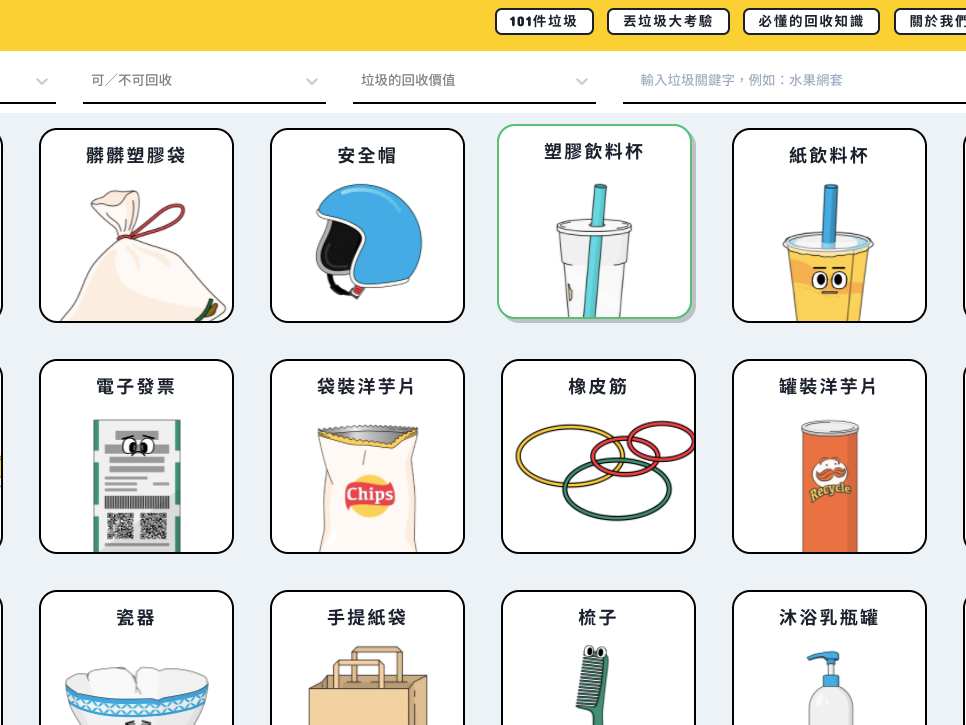
This led to their next initiative: the Recycling Encyclopedia.
It is not merely a handbook.
It is a rethinking of fundamental questions:
How should recycling spaces be designed to avoid confusion?
How can visuals communicate clearly at a glance?
How can behavior be guided toward genuine change?
In this process, we helped connect diverse partners—including design teams for data visualization,
and major platforms to better understand consumption and recycling behaviors across different groups.
As a supporting partner in public-good initiatives, what we provide goes beyond funding.
We contribute connections between people, strategic dialogue and direction, and the courage to continue believing in the path when facing skepticism.
RE-THINK does not shout grand slogans.
They simply use design, again and again, to pull a better tomorrow a little closer.
After Marine Waste Encyclopedia received the highest honor at the German Red Dot Design Award, RE-THINK did not slow down.
They realized another everyday issue lies even closer to us: recycling.
In Taiwan, recycling rules vary from place to place.
The same word—“recyclable”—can mean different things to different people.
Some interpret it as “burnable vs. non-burnable.”
Others think it means “can it be reused?”
The label may be the same, but the understanding is not.
This led to their next initiative: the Recycling Encyclopedia.
It is not merely a handbook.
It is a rethinking of fundamental questions:
How should recycling spaces be designed to avoid confusion?
How can visuals communicate clearly at a glance?
How can behavior be guided toward genuine change?
In this process, we helped connect diverse partners—including design teams for data visualization,
and major platforms to better understand consumption and recycling behaviors across different groups.
As a supporting partner in public-good initiatives, what we provide goes beyond funding.
We contribute connections between people, strategic dialogue and direction, and the courage to continue believing in the path when facing skepticism.
RE-THINK does not shout grand slogans.
They simply use design, again and again, to pull a better tomorrow a little closer.