Education
If It Can't Be Replicated Nationwide, Then Become a “Sanctuary”
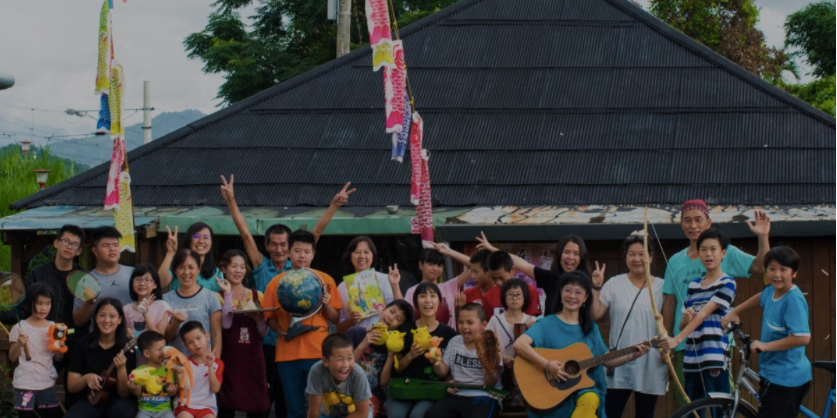
What makes Wu Wei Wu truly special begins after the donations arrive.
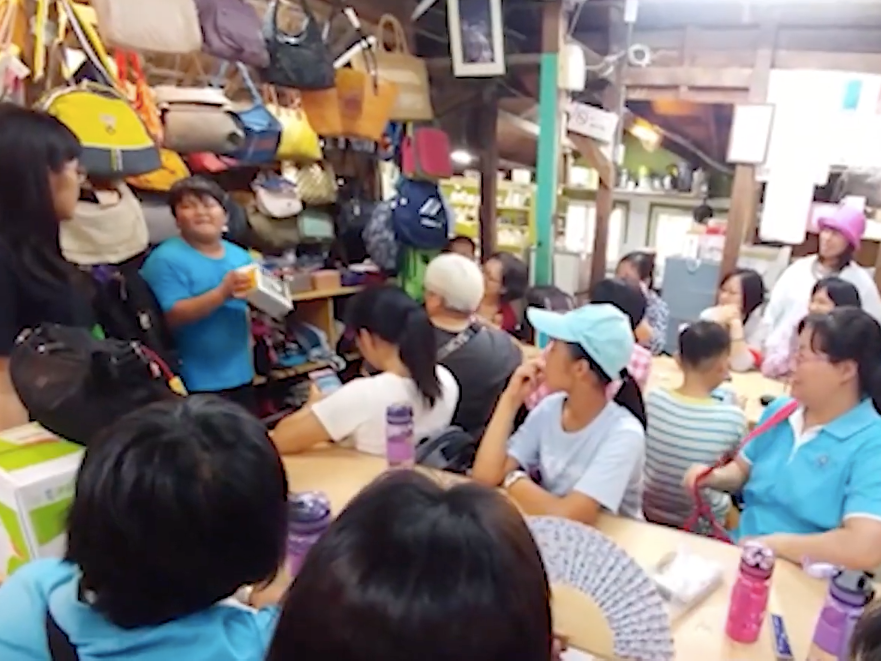
The entire store is run by the children themselves.
From inventory and display to pricing and sales—everything is managed by them.
Duration:2012~2016
Rationale
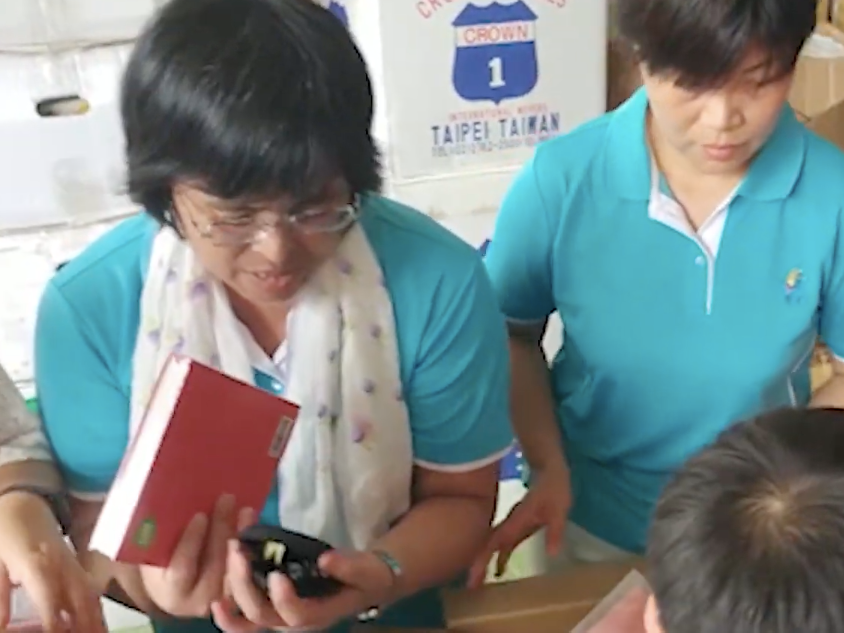
Through our involvement in the “Love Book Bank” initiative, we began to look more deeply into rural education.
That was when we encountered Wu Wei Wu in Hualien.
At first, Wu Wei Wu raised a practical request:
Shipping secondhand goods from western Taiwan to the east is expensive—could we offer discounted freight rates to encourage more donations?
Supporting a good cause was not the issue.
But we had a quiet concern:
Would this simply mean transporting unwanted goods from the west to be discarded again in the east?
Wu Wei Wu was candid.
Only about 30% of donated items are truly suitable for resale or exchange.
Initiatives
If we were going to collaborate, we wanted to do it well.
Together, we adjusted the approach.
Instead of framing donations as “decluttering” or “recycling,” we reframed them as “gift-giving.”
Companies and groups were encouraged to organize collective donation drives, holding each other accountable to contribute only items in good condition—clean, intact, and usable.
The results were immediate:
The quality of goods improved significantly, and children faced fewer challenges sorting through unsuitable items.
Under these conditions, we were glad to provide preferential shipping rates so that goodwill could flow smoothly.
What makes Wu Wei Wu extraordinary begins after the goods arrive.
The store’s operations are entirely entrusted to children.
They manage storage, display, pricing, and sales.
Along the way, they ask profound questions:
Why would someone give away something so nice?
Why would someone donate broken items?
If Monet’s paintings are worth so much, how much is a mug printed with his artwork worth?
These questions turn objects into gateways—connecting children to the wider world.
Through their labor, children earn points, which they can exchange for items they want.
Effort leads to reward—replacing the identity of passive recipients with active participants.
The challenges rural children face are rarely singular.
Family dysfunction, economic hardship, and layered vulnerabilities intertwine.
Wu Wei Wu did not choose to become a conventional after-school tutoring center.
Instead, it responded to reality by “running a store.”
For children, “learning how to earn money at Wu Wei Wu” became a legitimate reason to leave home.
The space fills gaps that neither school nor family can fully address—becoming a relatively safe environment where children are accompanied and supported.
Wu Wei Wu does not assign blame, nor does it wait for distant experts to rescue.
Through daily companionship, it gradually reconnects children, families, and society.
As founder Gu Yu-Jun puts it:
“What we do is ‘handcrafted education.’
In a world of mass production, flaws exist.
But the labels placed on children—when seen through the lens of craftsmanship—become uniqueness and value.”
Impact
Today, Wu Wei Wu has become a recognized public-good landmark in Hualien.
Using idle space, it has created a haven where children live, learn, and work.
The children are the store managers.
The process itself is the most authentic curriculum.
Later, Wu Wei Wu expressed a need for more space for sorting and storage.
But coming from a logistics background, we care more about flow than accumulation.
We quickly reached a shared understanding:
Donors hope their items will be used—not stored indefinitely.
Together, we designed a new process:
Each item has a maximum length of stay at Wu Wei Wu.
If unsold, it must be redirected to other organizations in eastern Taiwan that need it.
Warehouses cannot expand simply because letting go feels difficult.
In the future, we hope Wu Wei Wu will not only remain a learning ground for children,
but also evolve into a regional redistribution hub for charitable goods in eastern Taiwan—
Ensuring that goodwill does not get stuck,
but continues to flow forward.
Today, Wu Wei Wu has become a recognized public-good landmark in Hualien.
Using idle space, it has created a haven where children live, learn, and work.
The children are the store managers.
The process itself is the most authentic curriculum.
Later, Wu Wei Wu expressed a need for more space for sorting and storage.
But coming from a logistics background, we care more about flow than accumulation.
We quickly reached a shared understanding:
Donors hope their items will be used—not stored indefinitely.
Together, we designed a new process:
Each item has a maximum length of stay at Wu Wei Wu.
If unsold, it must be redirected to other organizations in eastern Taiwan that need it.
Warehouses cannot expand simply because letting go feels difficult.
In the future, we hope Wu Wei Wu will not only remain a learning ground for children,
but also evolve into a regional redistribution hub for charitable goods in eastern Taiwan—
Ensuring that goodwill does not get stuck,
but continues to flow forward.