Teacher, I Believe in You
Rationale
During our involvement in the “Love Book Bank” initiative, we observed something striking.
We had assumed that using familiar corporate approaches—public recognition, additional resources, visible platforms—would help dedicated teachers gain recognition and inspire more educators to join shared reading efforts.
So we made extensive preparations:
- Arranged special classes in schools
- Invited well-known speakers to give talks
- Sought to shine a spotlight on teachers willing to go the extra mile
The reason was simple and deeply real:
In schools, being too visible can mean being labeled.
After brief applause, teachers still return to the same—sometimes heavier—daily realities.
This led us to an important realization:
The challenge of rural teacher support cannot rely solely on external resources being “added in.”
We must also find ways for internal strength within schools to “grow from within.”
Initiatives
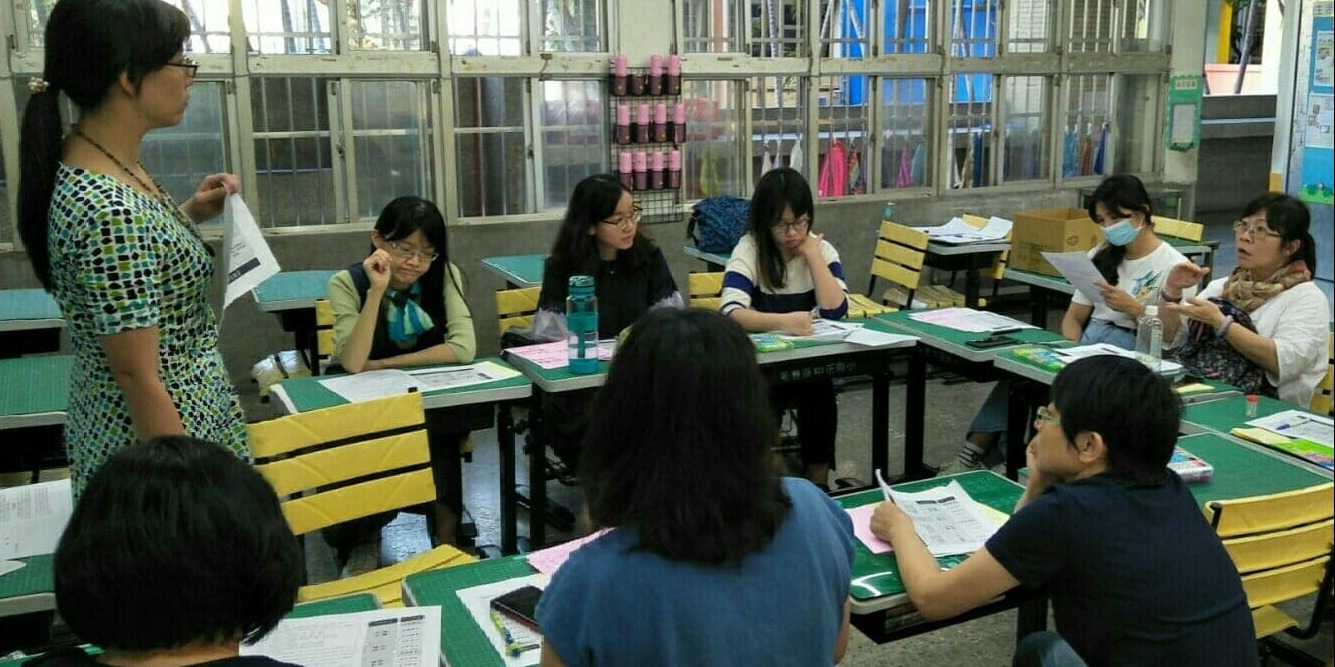
With the rise of digital networks and online communities, quiet changes began taking place in the education field.Teachers who had once worked in isolation started meeting online—sharing lesson plans, discussing pedagogy, collaborating across schools and even across counties.
Gradually, the role of “teacher” was redefined.
No longer merely someone who delivers lessons according to a timetable, but a practitioner who continuously researches learning methods, designs curricula, and tests ideas in real classrooms.
These communities did not exist for awards or recognition.
Seeing their own growth—and that of their students—was reward enough
In this transformation, Professor Lan Wei-Ying played a pivotal role.
Formerly a public high school teacher, she founded the Ying-Guang Education Association in 2019.
Her approach was pragmatic:
She called on experienced educators to accompany rural teachers—online and in person—step by step: preparing lessons together, teaching together, and solving classroom challenges together.No grand conferences.
No abstract theory.
Just: “Where are you stuck? Let’s figure it out together.”For many teachers working in rural areas and feeling alone, this kind of support was exactly what they needed.
If our support for TFT (Teach For Taiwan) aimed to build a new teacher development pathway—bringing young people into rural classrooms to spark change—
we also understood clearly that lasting educational transformation must come from the awakening and mutual support of in-service teachers.
So when Professor Lan chose to forgo the certainty of a future pension and step forward—mobilizing retired and active teachers to serve as partner mentors supporting those isolated within the system—we joined without hesitation.
From community to system.
This is not just the story of an association. It is a collective action that began with teacher communities and gradually moved toward systemic influence.
Beyond directly supporting schools in Taitung, Hualien, and Chiayi, we also began engaging at the policy level:
In 2024, promoting amendments to the Act Governing the Development of Education for Remote Areas
In 2025, assisting in the planning of a “Talent and Resource Database for Remote School and Teacher Support Systems”
Advocating policy improvements to regulations governing public school teachers’ concurrent positions, enabling educators to legally and confidently participate in support work
Because we believe that when the strength already present within the system is meaningfully connected, support becomes more than one-time assistance—it becomes a sustainable network.
And this journey—from teachers supporting one another, to gradual transformation of society and institutions—is something we would never want to miss.