

Culture
Beyond One-Off Acts, Building What Truly Reaches Everyone
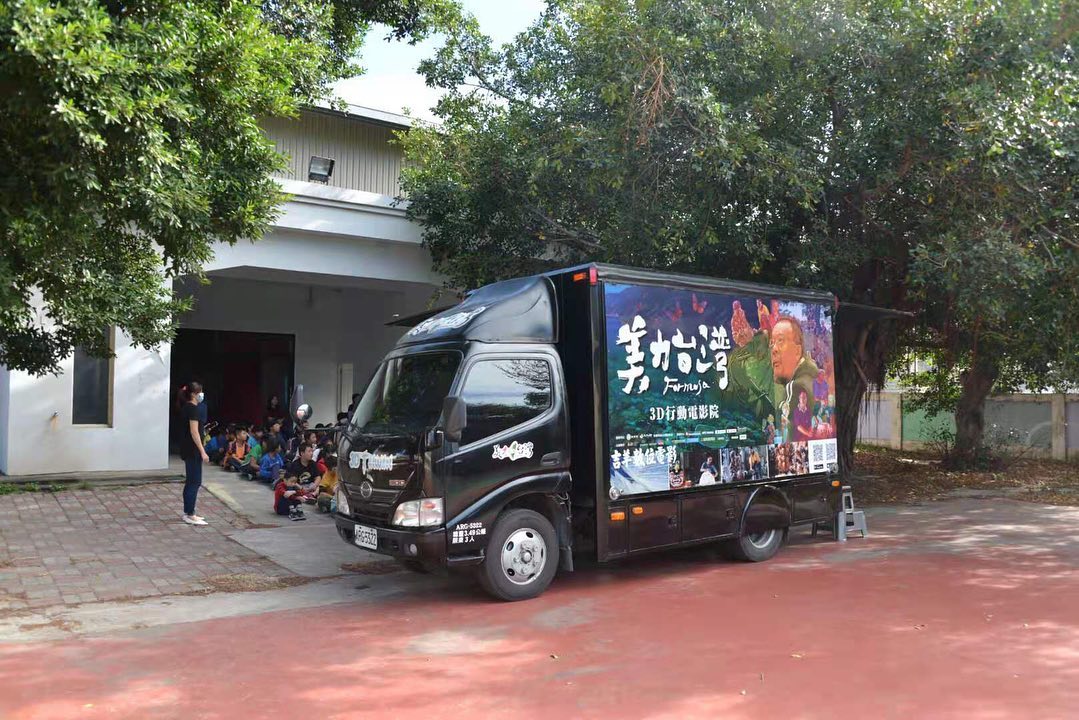
Director Qu Chuan-Li held a simple belief:whether in cities or rural areas, every child deserves the chance to experience the beauty of 3D cinema.
From this idea, the “Taiwan Bravo! 3D Mobile Cinema” was launched — with the goal of touring every elementary school across Taiwan.
From this idea, the “Taiwan Bravo! 3D Mobile Cinema” was launched — with the goal of touring every elementary school across Taiwan.
Duration:2014~2018
Rationale
What does it really mean to “serve rural communities”?
When people talk about social engagement, they often say,
“We should reach out to rural areas.”
But if we think more carefully, many questions remain unclear:
How often is enough to count as engagement?
How many places must you visit to make an impact?
Does “rural” mean geographically remote, or simply lacking resources?
Is it more important to say “we’ve been there,”
or to ensure that every child has access?
If all we do is cite a few examples or take a few photos,
it is difficult to create real change.
In 2013, Director Qu’s film “3D Taiwan” won the Hollywood International 3D Award alongside Ang Lee’s Life of Pi.
The following year, he made an unexpected decision—
to build a 3D mobile cinema truck with his own hands.
His idea was simple:
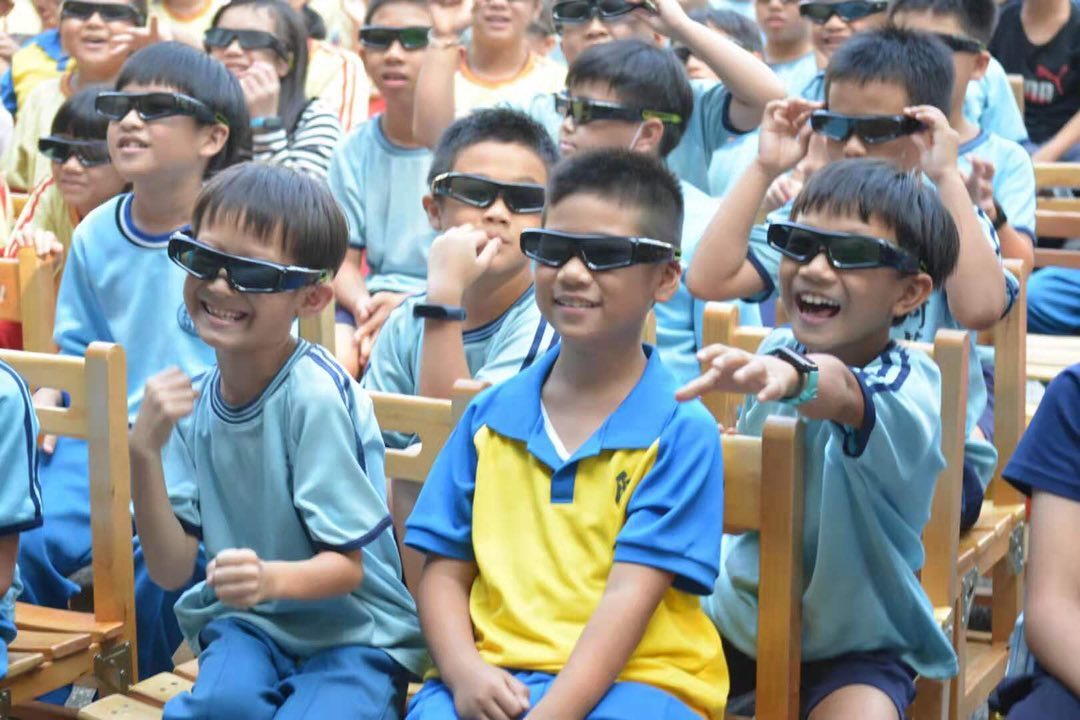
every child, regardless of where they live, should have the opportunity to see the beauty of 3D images.
And so, the Taiwan Bravo! 3D Mobile Cinema began its journey,
aiming to reach every elementary school in Taiwan.
Initiatives
As we looked more closely into the project, we identified a practical limitation.
At the time, the scale of 3D equipment allowed only about 200 viewers per screening at each school.
For larger schools with hundreds or even thousands of students,
this would mean selecting only a portion of children to participate—
which contradicts the very principle of equal access.
So the project made a deliberate choice:
to prioritize schools with fewer than 200 students.
There were two key reasons:
Every child in the school could participate—no selection, no exclusion
These schools were often located in areas with fewer resources and less exposure to touring arts programs
Importantly, the 3D Mobile Cinema was never intended to replace other arts outreach initiatives.
Instead, it fills a crucial role at the very end of the system.
Large-scale touring productions are better suited for bigger schools.
The mobile cinema, on the other hand, can flexibly reach smaller and more remote campuses.
Together, they function much like a logistics network—
matching different types of delivery vehicles to different needs, ensuring resources reach the right places.
Only through this kind of coordination can we truly achieve:
reaching all of Taiwan, and reaching every child.
Impact
Over the years, there have been only a few teams in Taiwan capable of sustaining long-term, stable arts outreach tours.
Beyond the Paper Windmill Theatre, Director Qu’s team stands among the very few.
Despite limited new entrants in this field,
they continue to upgrade vehicles, improve equipment, and even build new mobile cinemas—
all to provide better experiences for children.
As for us, we have remained close partners—
holding ourselves to the highest standards, and continuously asking:
How can this go deeper?
How can it reach further?
How can a meaningful initiative become a system that lasts?
Participation is not simply about showing up.
This project has made one thing clear to us:
True participation is not about doing something once—
it is about figuring out how to keep doing it.
It is not about being emotionally moving,
but about being structurally complete.
Not about moving fast,
but about being able to go far.
This is the kind of participation we believe in.
Over the years, there have been only a few teams in Taiwan capable of sustaining long-term, stable arts outreach tours.
Beyond the Paper Windmill Theatre, Director Qu’s team stands among the very few.
Despite limited new entrants in this field,
they continue to upgrade vehicles, improve equipment, and even build new mobile cinemas—
all to provide better experiences for children.
As for us, we have remained close partners—
holding ourselves to the highest standards, and continuously asking:
How can this go deeper?
How can it reach further?
How can a meaningful initiative become a system that lasts?
Participation is not simply about showing up.
This project has made one thing clear to us:
True participation is not about doing something once—
it is about figuring out how to keep doing it.
It is not about being emotionally moving,
but about being structurally complete.
Not about moving fast,
but about being able to go far.
This is the kind of participation we believe in.
Visit Formosa 3D

