

Inclusion
Sometimes the Hardest Questions Lead Back to Ourselves
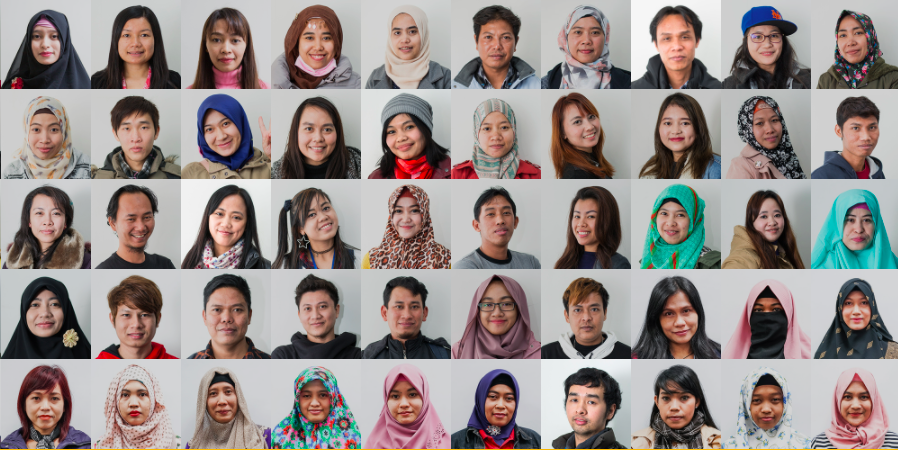
Whether newcomers to Taiwan or migrant workers, many first encounter this island during the years when dreams begin to take shape and memories are made. May Taiwan become a truly inclusive global citizen—one that embraces diversity and treats every person from afar with dignity and kindness.
Duration:2017~2019

Rationale
Why is it that companies sometimes do good things, yet still face criticism?
For a chemical manufacturer, society's expectation is not that it delivers meals to elderly residents, but that it minimizes pollution and makes its operations safer.
And yet, many corporate CSR initiatives end up addressing the wrong problems.
Companies feel they are making an effort, while society feels the real issues remain unresolved.
The problem is not a lack of goodwill.
Rather, the most important problems often lie within the company itself.
In some cases, corporations face challenges even more severe than those confronted by society at large.
Take the logistics industry, for example.
For many years, the incidence of oral cancer among logistics workers ranked among the highest in Taiwan.
In other words, this was not merely a matter of individual lifestyle choices—it reflected a structural risk embedded within the industry itself.
Instead of simply promoting anti-betel nut campaigns to the public, the real change needed to happen inside companies: in their environment and culture.
What appears to be a social problem often demands an inward-looking answer.
Initiatives
Within the logistics sector, another reality often goes unnoticed.
Internal HR surveys revealed that the proportion of employees married to foreign spouses was significantly higher than the national average.
Moreover, many drivers served as the sole breadwinners for their families.
Taken together, these circumstances represented not merely family issues, but long-term social vulnerabilities.
So we decided to begin with our own people.
We surveyed organizations working with immigrant communities and undertook a number of modest yet practical initiatives:
- Subscribing to 4-Way Voice and providing copies free of charge to immigrant spouses, helping them better understand Taiwanese society;
- Providing subscriptions to Kiddy Monthly Magazine for their children until the age of six, supporting early learning;
- Collaborating with the Taiwanese-Southeast Asian Sisters Association to develop Taiwan's first board game centered on Vietnamese culture and language.
To make life in Taiwan feel a little less lonely and a little less unfamiliar.
At the same time, we recognized another issue.
When an entire family depends financially on one person, a single crisis can destabilize the whole household.
Given that logistics workers are spread throughout Taiwan, we wondered:
Could digital learning help immigrant spouses and migrant workers develop basic business and financial skills, thereby strengthening their families' resilience?
This question eventually led us to One-Forty.
Perhaps we were trying to address market-driven inequalities with market-based solutions.
But regardless, we felt it was worth trying.
Impact
Within the logistics sector, another reality often goes unnoticed.
Internal HR surveys revealed that the proportion of employees married to foreign spouses was significantly higher than the national average.
Moreover, many drivers served as the sole breadwinners for their families.
Taken together, these circumstances represented not merely family issues, but long-term social vulnerabilities.
So we decided to begin with our own people.
We surveyed organizations working with immigrant communities and undertook a number of modest yet practical initiatives:
To make life in Taiwan feel a little less lonely and a little less unfamiliar.
At the same time, we recognized another issue.
When an entire family depends financially on one person, a single crisis can destabilize the whole household.
Given that logistics workers are spread throughout Taiwan, we wondered:
Could digital learning help immigrant spouses and migrant workers develop basic business and financial skills, thereby strengthening their families' resilience?
This question eventually led us to One-Forty.
Perhaps we were trying to address market-driven inequalities with market-based solutions.
But regardless, we felt it was worth trying.
Within the logistics sector, another reality often goes unnoticed.
Internal HR surveys revealed that the proportion of employees married to foreign spouses was significantly higher than the national average.
Moreover, many drivers served as the sole breadwinners for their families.
Taken together, these circumstances represented not merely family issues, but long-term social vulnerabilities.
So we decided to begin with our own people.
We surveyed organizations working with immigrant communities and undertook a number of modest yet practical initiatives:
- Subscribing to 4-Way Voice and providing copies free of charge to immigrant spouses, helping them better understand Taiwanese society;
- Providing subscriptions to Kiddy Monthly Magazine for their children until the age of six, supporting early learning;
- Collaborating with the Taiwanese-Southeast Asian Sisters Association to develop Taiwan's first board game centered on Vietnamese culture and language.
To make life in Taiwan feel a little less lonely and a little less unfamiliar.
At the same time, we recognized another issue.
When an entire family depends financially on one person, a single crisis can destabilize the whole household.
Given that logistics workers are spread throughout Taiwan, we wondered:
Could digital learning help immigrant spouses and migrant workers develop basic business and financial skills, thereby strengthening their families' resilience?
This question eventually led us to One-Forty.
Perhaps we were trying to address market-driven inequalities with market-based solutions.
But regardless, we felt it was worth trying.



Visit One-Forty

