

Education
Investing in Ideas That Scale Impact
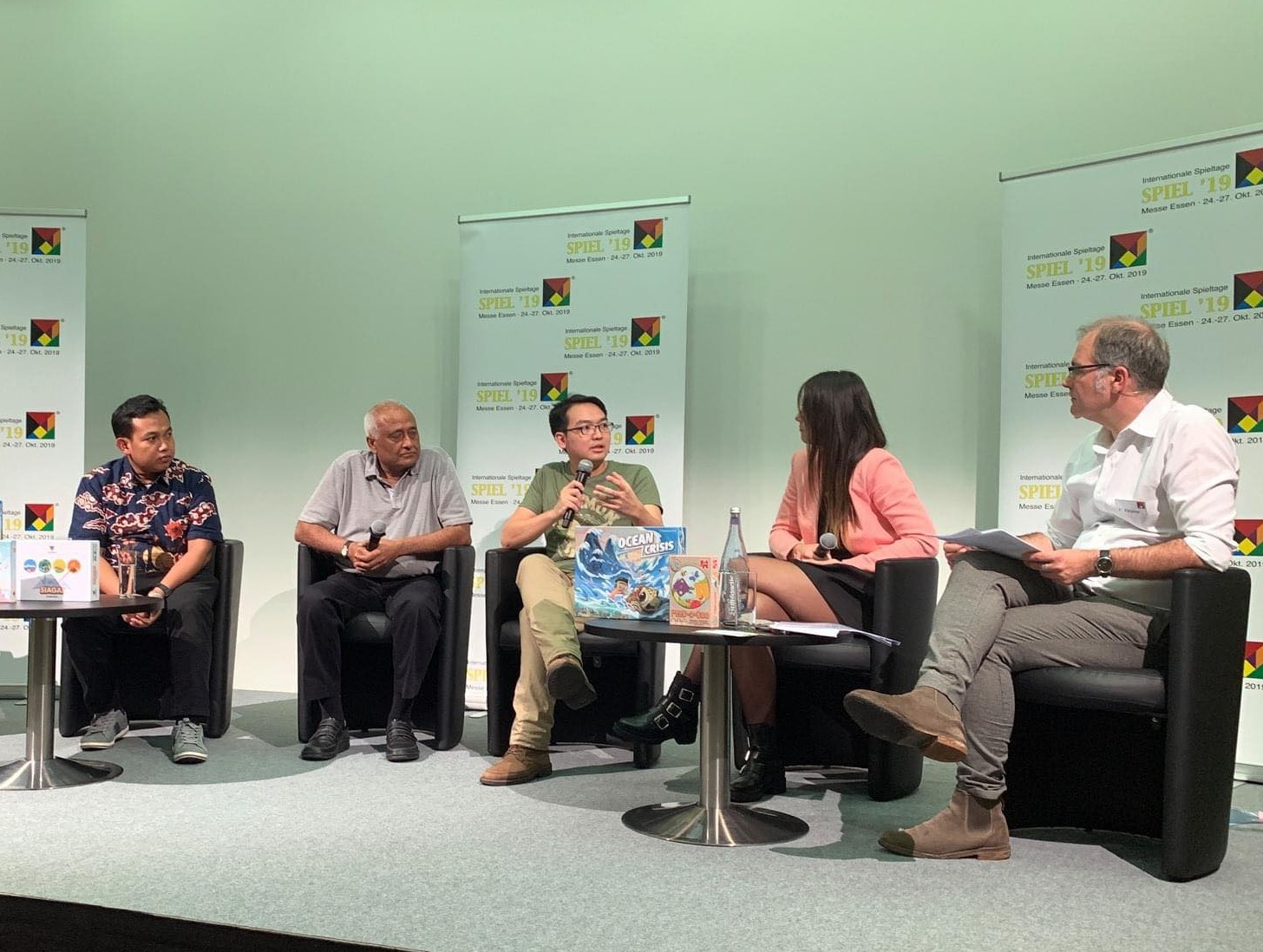
We joined hands with our long-time partner Shepherd Kit and Re-lab, and together proposed a different approach: If the problem lies in the industry's structure, then the answer must begin with the system itself. And so, Reality Engine was born.
Duration:2016~2022

Rationale
Over the years, we have remained deeply interested in the value of learning and human interaction, and have supported the development of board games and immersive experiences.
Yet through accompanying these teams, we gradually came to recognize a fundamental challenge:
Taiwan's board game industry is rich in creativity, but difficult to sustain.
The issue was never the quality of the games.
Rather, it was the lack of:
- a complete industry infrastructure,
- stable distribution channels,
- and scalable support systems.
They could create excellent games, but building a business around them proved far more difficult.
For years, Shepherd Kit focused on original board games made in Taiwan.
The company accumulated more than NT$20 million through crowdfunding and raised over US$200,000 on Kickstarter.
When we first collaborated in 2017, the goal was straightforward:
To create products with educational and social value.
That partnership eventually led to Ocean Crisis, a board game developed together with the environmental organization RE-THINK.
But several years later, the team had come to a deeper realization:
As long as we focus only on products, we will never solve the underlying problem.
To change the future, we must change how the industry itself works.
Initiatives
In 2020, amid the outbreak of the pandemic, we sat down with our long-time partners—Sheepdog Games and Re-lab—and proposed a different idea.
If the industry's challenge was structural, then perhaps the answer should be structural as well.
That was the beginning of Reality Engine.
Its identity was deliberately defined:
It would not be another game company.
It would be a platform.
Its mission was simple:
To build a digital, scalable ecosystem covering the entire value chain of tabletop games—from creation and licensing to manufacturing and distribution—so that creators no longer had to work alone.
When the team invited us to participate, they were not asking for a donation.
Nor was this merely another project collaboration.
They hoped we would become early investors.
For a startup, the first capital is never just money.
It represents trust.
It represents commitment.
Because we understood the team well—and because that trust had been built over years—we decided to experiment with a different model:
Replacing donations with angel investment.
Replacing one-way support with shared participation.
At the earliest stage, we exchanged a small amount of equity for our investment.
This allowed the team to plan with greater confidence and move toward its next phase with stronger foundations.
Impact
The results came faster than we had expected.
Within six months, the initial investment attracted follow-on support from:
In Taiwan, angel investing has never been easy.
Without products or revenue, the value of a startup is difficult to see.
And the first check is almost always the hardest one to secure.
Yet this experience strengthened our belief:
Investment-based social innovation can sometimes create impacts greater than traditional philanthropy.
Early capital acts like seed money.
It provides more than cash.
It establishes a basic valuation, attracts attention, and generates trust and resources that multiply over time.
Perhaps there is a third path for social innovation.
Somewhere between charitable donations and high-return venture capital lies another possibility—
a path willing to absorb early risks,
not in a hurry to demand returns,
but confident that well-designed systems can amplify positive impact.
Reality Engine is one experiment along that path.
The results came faster than we had expected.
Within six months, the initial investment attracted follow-on support from:
- the National Development Fund's Angel Investment Program, and
- National Taiwan University.
In Taiwan, angel investing has never been easy.
Without products or revenue, the value of a startup is difficult to see.
And the first check is almost always the hardest one to secure.
Yet this experience strengthened our belief:
Investment-based social innovation can sometimes create impacts greater than traditional philanthropy.
Early capital acts like seed money.
It provides more than cash.
It establishes a basic valuation, attracts attention, and generates trust and resources that multiply over time.
Perhaps there is a third path for social innovation.
Somewhere between charitable donations and high-return venture capital lies another possibility—
a path willing to absorb early risks,
not in a hurry to demand returns,
but confident that well-designed systems can amplify positive impact.
Reality Engine is one experiment along that path.



Visit Real Engine , Re Lab

